Embracing Single Purpose Tech
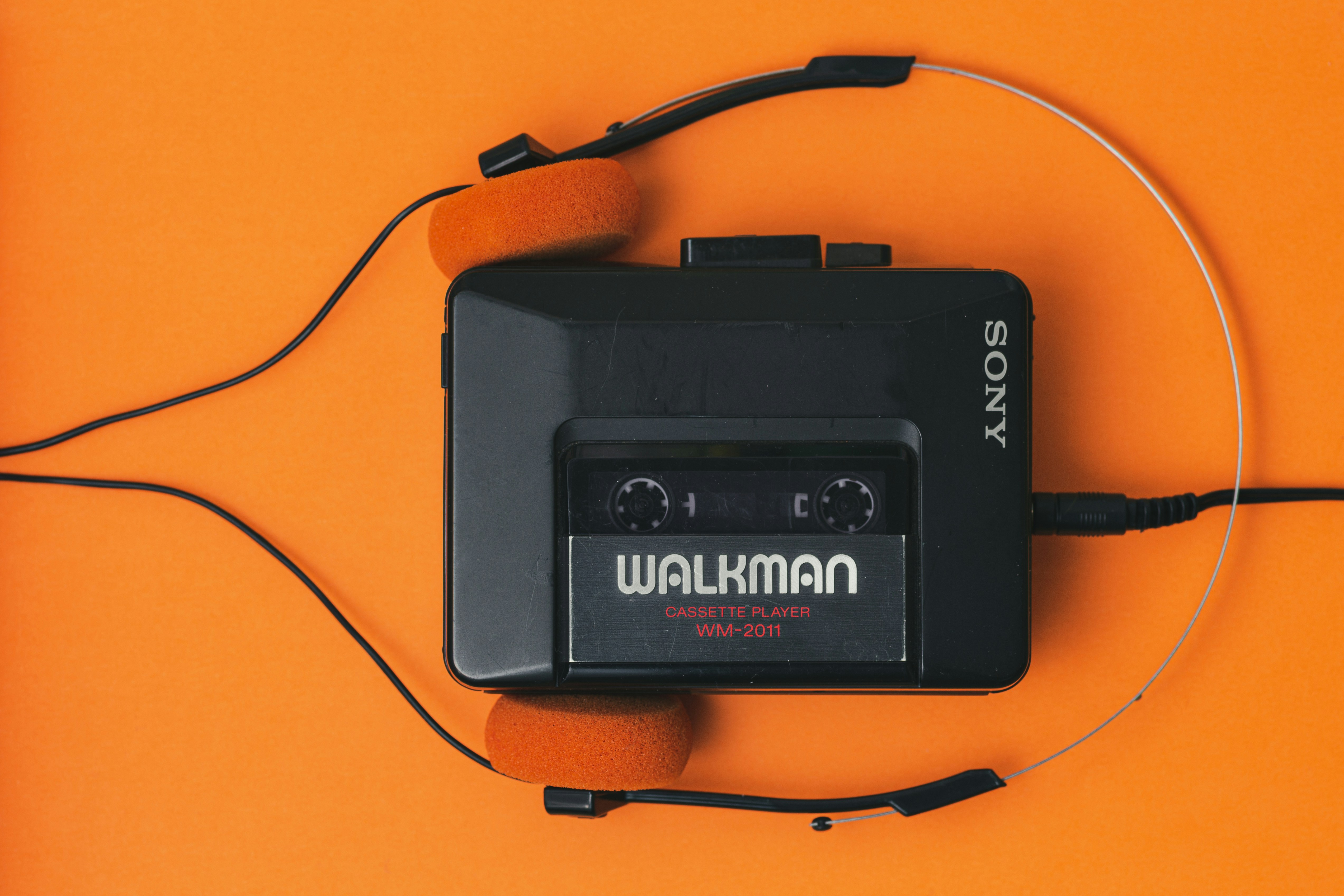
Table of Contents
First things first, maybe this article and the topic I’ll try to write on is just a symptom of me being a millennial that works in tech, taking a shot to grasp some sort of control in some aspects of my life given our reality. After all, we’ve become a product to major corporations, all in return of a couple microseconds of dopamine in our brains. I also must disclaim, recently I read the book “The Anxious Generation”1 by Jonathan Haidt, so that book, the rising cost of living, how everything has become so expensive while we own nothing, and some ideas that I gathered from the ever increasing amount of videos in my YouTube feed from people also opting for single purpose tech was the motivator to get this article going. I promise to try to explain in more detail later, but be advised that this will contain my strong opinion on the state of our current society.
I also want to be clear: I’m not anti-tech. I work in tech, I love technology, and I genuinely believe we’re living through one of the most exciting eras of innovation in human history. My smartphone still goes everywhere with me. This isn’t about rejecting progress, it’s about making sure the tools we build serve us, not the other way around.
The Age of the “Everything Machine”#
In the early to mid 2000s, a lot of companies were pushing to miniaturize technology. I remember living through a time where it felt like cellphones (yes, they weren’t smart yet) were getting smaller each year that passed by. At some point this pivoted: instead of making them small, they started adding features into them. Cameras, WAP (the “Wireless Application Protocol”, or the atrocious protocol for “internet” on these early phones), ringtones (first monophonic, then polyphonic, then true tones), games, and so on. The sentiment was to differentiate by loading more into each device, and it spread to other technology too, but it was most visible on phones, and it’s easy to see where we ended up.
A good parcel would say that the culmination, the milestone, was in 2007, in the fatidic day when Steve Jobs said, “an iPod, a phone, and an internet communicator”. I like to think that other companies were doing that too, you had your Nokias and your Blackberrys, but they clearly didn’t have the “glowing rectangle” vibe of the iPhone (and I can’t stay mad about it, I dig Apple’s design a good amount). From there our fate was sealed, with every new iteration, more and more was added to the little machine, and we were hyped about it.
Don’t get me wrong: I think smartphones are amazing. A device where you can navigate the internet, ask about random facts, take photos, listen to music, play games, and so much more, it’s nothing short of an extraordinary feat. And we were happy and excited about it, for a time. Nowadays, it’s still a marvel of engineering, but between the attention drain, the endless notifications, and the data harvesting, the magic has been buried under a business model that treats us as the product.
And somewhere along the way, the subscription model made it worse. We used to buy albums, we owned them, kept them on a shelf, and they were ours. We used to buy games in a box, with a manual, and they were complete. Now we subscribe to everything. Spotify, Apple Music, Xbox Game Pass, Adobe Creative Cloud, iCloud, the list grows every year, and the common thread is that we never actually own what we pay for. We rent it, indefinitely, and the moment we stop paying, it all vanishes. Owning physical media, or even local digital files, has become a quiet act of resistance against an economy that wants us to own nothing and keep paying forever.
Growing up alongside the tech evolution#
I was born in the mid 90s, which means I grew up right alongside the very transition I just described. My childhood was filled with dedicated gadgets that each had one job. I had a portable cassette player for music (an old AIWA that I borrowed from my dad), a PSOne for gaming, a point-and-shoot camera that also belonged to my dad (and that I could barely use since he was very jealous of it), and later one of those thumbstick MP3 players for my carefully curated playlists. Every device had its own place in my backpack, its own set of batteries to worry about, its own reason to exist. It wasn’t inconvenient, but it was just how things worked.
Then the smartphone arrived, and slowly, one by one, those gadgets became redundant. My MP3 player was replaced by Spotify on my phone. My camera was replaced by the ever-improving lens on my iPhone. My handheld console was replaced by mobile games. The transition felt natural, even liberating at first. One device to rule them all. No more juggling cables, no more “wait, which pocket did I put the MP3 in?”.
But somewhere along the way, the convenience started feeling less like freedom and more like noise.
I noticed it first when putting together a simple playlist. Instead of opening my music library, I was fighting off notifications from three different messaging apps, an email reminder, and alerts, all before I could even hit play on a track. Then I noticed it when trying to snap a quick photo of a nice sunset, my phone changing configurations on the way, buzzing notifications, more things to annoy when just trying to get a photo. I wasn’t just using a device anymore. I was being pulled in ten directions at once, and the device in my hand was the common denominator for every single one of them.
What was sold as convergence started to feel like consolidation, where every function fought for attention inside the same glowing rectangle, and attention was exactly what they were harvesting.
Stirring up the pot and being intentional#
That realization didn’t hit me all at once. It was a slow build, a notification here, a distracted moment there, 30 minutes vanished in scrolling IG, until I reached a point where I couldn’t ignore the pattern anymore. I had a smartphone that could do everything, yet I felt like I was doing nothing of substance with it. So I decided to stir the pot. I started bringing dedicated hardware back into my routine, not out of nostalgia (though I won’t deny there’s some of that), but out of a desire for intentionality. If I wanted to listen to music, I wanted it to be just that. If I wanted to take a photo, I wanted the act of framing the shot to be the whole experience. So I started small, one device at a time, and realized each swap brought back a piece of focus I didn’t even know I had lost.
Photography to make my memories eternal#
I picked up my Canon EOS M50 MkII with a specific goal in mind: to be present. Shooting with a dedicated camera changed my relationship with photography almost immediately. When I pull the camera out, I’m not thinking about broadcasting anything. I’m not thinking about Stories, likes, or engagement. I’m thinking about the light, the composition, and capturing a moment that will last longer than 24 hours on a server somewhere.
There’s also the friction of it, and I mean that in the best way. A dedicated camera has a deliberate workflow. You frame the shot, you focus, you click. The photo lands on an SD card, not in your cloud gallery. You have to sit with it later, transfer it, edit it, and decide what’s worth keeping. That slowness is exactly what was missing from my smartphone photography, where I’d snap twenty photos of the same thing and forget about them the next day. The M50 MkII forced me back into photography as a craft, not just a reflex.
Music to get things going#
If there’s one change that raised eyebrows among my friends, it was digging out an old iPod Touch 4th Gen from a drawer and making it my daily music player. Yes, the one with the 30-pin connector. And yes, it’s ridiculous. But it works.
The irony is impossible to miss: I’m using a decade-old device that was Apple’s first step toward the very smartphone monoculture I’m critiquing. But that’s precisely the point. The iPod Touch can’t do anything else (nowadays). It can’t notify me about a Slack message, show me a breaking news alert, or recommend a podcast I didn’t ask for. It plays music. That’s it. And because that’s all it does, I listen to full albums again. I curate my own library instead of letting an algorithm serve me whatever keeps me on the platform. Tracks that used to be disposable streams are now MP3s I chose and downloaded myself.
There’s a deeper statement here, too. Every month I was paying Spotify, Apple Music, and a handful of other subscriptions, and at the end of the year I had nothing to show for it but a list of listening statistics. No files. No library. No ownership. The moment I stopped paying, all those carefully curated playlists would disappear. Actually owning the files feels like pushing back on a model that wants us to rent everything and own nothing. Plus, there’s a permanence in local files that streaming can’t replicate. No DRM, no region locks, no “this track is no longer available in your region.” Just my music, on my device, forever.
Gaming to spike my dopamine#
My gaming setup follows the same philosophy, but here I split it across two devices for two very different contexts.
On the go, I play on my PS Vita. It’s a handheld that respects your time: you pick it up, play a proper game with a real narrative and actual gameplay mechanics, and put it down without being nudged to buy a booster pack or watch a thirty-second ad between levels. The physical buttons alone transform the experience. There’s no mistaking a Vita session for the cheap, predatory dopamine loops that dominate mobile gaming, the kind designed not to entertain you, but to extract your attention and your wallet through battle passes, cooldown timers, and loot boxes.
At home, I gravitate toward my PS2. Yes, a console from 2000. It’s my reminder that games used to be complete on day one, no patches, no season passes, no storefront pushing microtransactions before the title screen finishes loading. Pop in the disc, play the game, and that’s it. The whole thing. I’ve even modernized it, bought a memory card with OPL, an 8bitdo wireless controller adapter, and an 8bitdo Pro 3 controller that looks like an SNES controller of the 21st-century era. The whole thing feels like playing my old PS2 but with nice modern features to make it more pleasurable (and this is not an 8bitdo ad post, I just really like their products).
And all of this stands in stark contrast to the subscription model that dominates gaming today. I don’t rent my PS2 games, I own them physically on a disc that can’t be revoked, delisted, or taken down. There’s no subscription fee, no online requirement, no risk of waking up to find my library gutted because a licensing deal fell through. The disc works the same today as it did twenty years ago, and it’ll work the same twenty years from now. That kind of permanence is something the subscription economy simply cannot offer.
Some other changes#
These three swaps (photography, music, gaming) are the core of my single-purpose tech setup, but they’re supported by smaller changes that reinforce the same principle. I use a Pocketbook for reading, which means no notifications interrupt my immersion in a book. I keep a physical notebook for notes and journaling, which is surprisingly effective at shutting down the urge to multitask. And I bought a standalone alarm clock so my phone spends the night outside my bedroom. Small choices, but each one reclaims a sliver of focus that the smartphone had quietly taken over.
The real reason why I wanted to write this#
If this article sounds like a hobbyist’s nostalgic rant, I get it. But there’s a deeper reason I wanted to write it, and it’s the tipping point that pushed me from “thinking about it” to actually doing it.
I realized my hobbies were losing their magic. Photography had become about immediately sharing on social media instead of capturing something beautiful. Music had become background noise served by an algorithm instead of an intentional listening experience. Gaming had been reduced to dopamine taps on a glass screen between notifications.
I’m not writing this to tell anyone to throw away their smartphone or move to a cabin in the woods. I’m writing this because I suspect there are other people like me, people who work in tech, love technology, are surrounded by it every day, but feel like the tools we use every day are slowly eroding the very hobbies that made us passionate about tech in the first place. I wanted to share that you can find a middle ground. You can embrace the convenience of modern tech while being intentional about where and when you let it in.
And honestly? The process of writing this article, putting thoughts together without a notification interrupting every few minutes, has been a reminder of why I started writing in the first place.
Is old tech really the solution?#
Let’s be honest: this setup comes with real trade-offs. I’ve painted a pretty picture so far, but the truth is more complicated. The question is whether the benefits outweigh the friction, and whether old tech is actually a sustainable solution or just a temporary escape from modernity.
Upside#
The wins are real and tangible. The tactile feedback of physical buttons, the satisfying click of a camera shutter, the weight of a dedicated device in your hands, these things matter more than I expected. My brain now knows what mode it should be in: when I pick up my camera, I’m in photography mode. When I grab my iPod, I’m in music mode. There’s no context-switching, no mental tax of resisting notifications while trying to enjoy a hobby.
And the bonus I didn’t anticipate: my smartphone battery finally lasts a full day. Sometimes two. Because I’m not using it for everything anymore, it has become what it was always meant to be, a communication tool that I reach for when I need it, not a black hole that pulls me in every time I unlock it.
Downside#
The friction is real. Carrying extra devices means your pockets are heavier and your bag is fuller. Going out for the day requires a small logistical exercise, camera, iPod, maybe the Vita if I know I’ll have downtime. You look around and realize you’ve become the person with a bag full of gadgets. There’s a certain irony in carrying multiple devices to solve a problem caused by carrying one.
Then there’s the slow workflow of manual data management. Syncing MP3s to an iPod via a computer in 2026 is a deliberate act. Offloading SD cards, organizing files, deciding what stays and what goes, it takes time and effort that the cloud handles for you automatically. Some days I miss the convenience of everything being synced and available everywhere. But I remind myself that the cloud’s convenience comes with a trade-off: you don’t really own what’s in it. My files are on my SD card, my music is on my hard drive, my games are on a disc, and no one can take them away or put them behind a higher paywall. The question I keep asking myself is whether that convenience was worth trading ownership for.
The view from down the road#
I’ll be brutally honest: relying on aging tech is not a long-term strategy. Batteries degrade. The iPod Touch 4th Gen’s battery won’t last forever, and replacing it is harder than it should be. The PS Vita’s proprietary memory cards are an expensive headache. The PS2 will eventually stop reading discs. And the security argument is real, devices that never get security updates are a risk if they ever touch the network.
There’s also the cable situation. Apple 30-pin, micro-USB, SD cards, USB-A to USB-C adapters, my desk drawer looks like a museum of connector standards. It’s not elegant, and it’s not scalable.
I don’t pretend this is a permanent solution. What it is, for now, is a conscious pause, a way to reset my relationship with technology while enjoying the devices that defined an era before everything converged into one screen.
Conclusion#
I still need my smartphone. I use it for maps, messaging, calls, banking, and a dozen other essential tasks that no single-purpose device can replace. This isn’t about abandoning modern tech, it’s about being intentional with it.
The real insight from this experiment isn’t that old tech is better. It’s that the best tool for the job is often the one that does one thing well, and the worst tool for any job is the one that does everything distractedly. By offloading specific tasks to devices that can’t do anything else, I’ve rediscovered the kind of focus that made me fall in love with technology in the first place, not as a consumer of endless content, but as someone who chooses what to engage with and when.
There’s also a quiet political edge to all of this. In a world where we subscribe to everything and own nothing, buying a physical game, an album you can hold, or a dedicated device that does one thing well is a small act of defiance. It’s a vote for ownership over access, for permanence over the endless rental that the subscription economy offers. I’m not saying we should abandon streaming or digital services altogether, they’re incredibly useful. But balancing them with things you actually own, that can’t be taken away when you stop paying, feels like reclaiming a piece of autonomy.
The line between being consumed by tech and being empowered by it is thinner than we think. It comes down to a simple question: who’s in control?
Resources#
Cover Photo by Florian Schmetz